
Speech vs. Language: A Parent’s Guide to Understanding Communication Delays

Updated: Jun 2
As a parent, you are the world’s leading expert on your child. You know the exact meaning behind a specific cry or the joy in a certain giggle. But when you start to notice that your child isn’t communicating quite like their peers, you might find yourself falling into a rabbit hole of clinical jargon.
“Is it a speech delay? Or is it a language disorder?”
In the world of therapy, these two terms aren't interchangeable. In fact, understanding the difference is the first step toward getting your child the specific support they need.
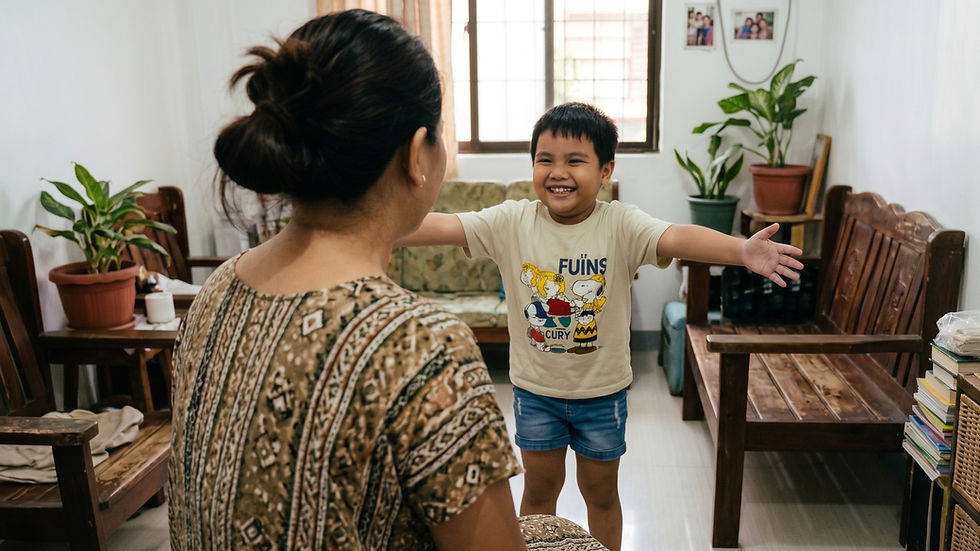
The Simple Analogy: Hardware vs. Software
According to the American Speech-Language-Hearing Association (ASHA), speech and language are separate but related systems of communication. To make sense of the jargon, think of your child’s communication like a computer or a smartphone.
Speech is the Hardware: It’s the physical output—the speakers, the wiring, and the mechanics. It’s how we produce sounds and words.
Language is the Software: It’s the data, the programs or apps, and the code. It’s what words we choose, what they mean, and how we put them together to share an idea.
A child can have perfect "hardware" (clear speech) but "software" that crashes (difficulty following directions). Or, they might have brilliant "software" (complex thoughts) but "hardware" that makes it hard for others to hear them clearly.
What is Speech? (The Physical Act)
When a Speech-Language Pathologist (SLP) talks about "speech," they are looking at the coordination of the lips, tongue, vocal folds, and breath. Speech is generally broken down into three main areas:
Articulation: How We Make Sounds
This refers to how we produce individual speech sounds. If a child says "wabbit" instead of "rabbit," or "thun" instead of "sun," they are working on articulation—the physical placement of the tongue and teeth.
Voice: The Quality of Sound
Voice involves how we use our vocal folds and breath to make sound. This includes volume, pitch, and whether the voice sounds hoarse, breathy, or overly nasal.
Fluency: The Rhythm of Talking
Fluency is the flow and rhythm of our talk. Stuttering (repeating sounds or getting "stuck" on a word) is a fluency challenge where the "rhythm" of the hardware is interrupted.
What is Language? (The Meaning and Rules)
Language is much broader than speech. It is a shared system of symbols that lets us communicate thoughts. Language is split into three primary categories:
Receptive Language: What Your Child Understands
This is what your child takes in. Can they follow a two-step instruction like, "Get your shoes and wait by the door"? Do they understand the difference between "in," "on," and "under"?
Expressive Language: How Your Child Shares Ideas
This is how your child "outputs" their thoughts. It’s not about how clear the words sound, but rather:
Vocabulary: Does the child say enough words for their age?
Grammar: Are they putting words in the right order?
Narrative: Can they tell a simple story?
Struggling to know if your toddler is just a 'late bloomer'? Read our deep dive: Late Talker or Language Delay? When to Stop Waiting.
Pragmatics: The Social Rules of Communication
This is the "social software." It includes knowing how to take turns in a conversation, staying on topic, and using different styles of talking depending on who you are with.
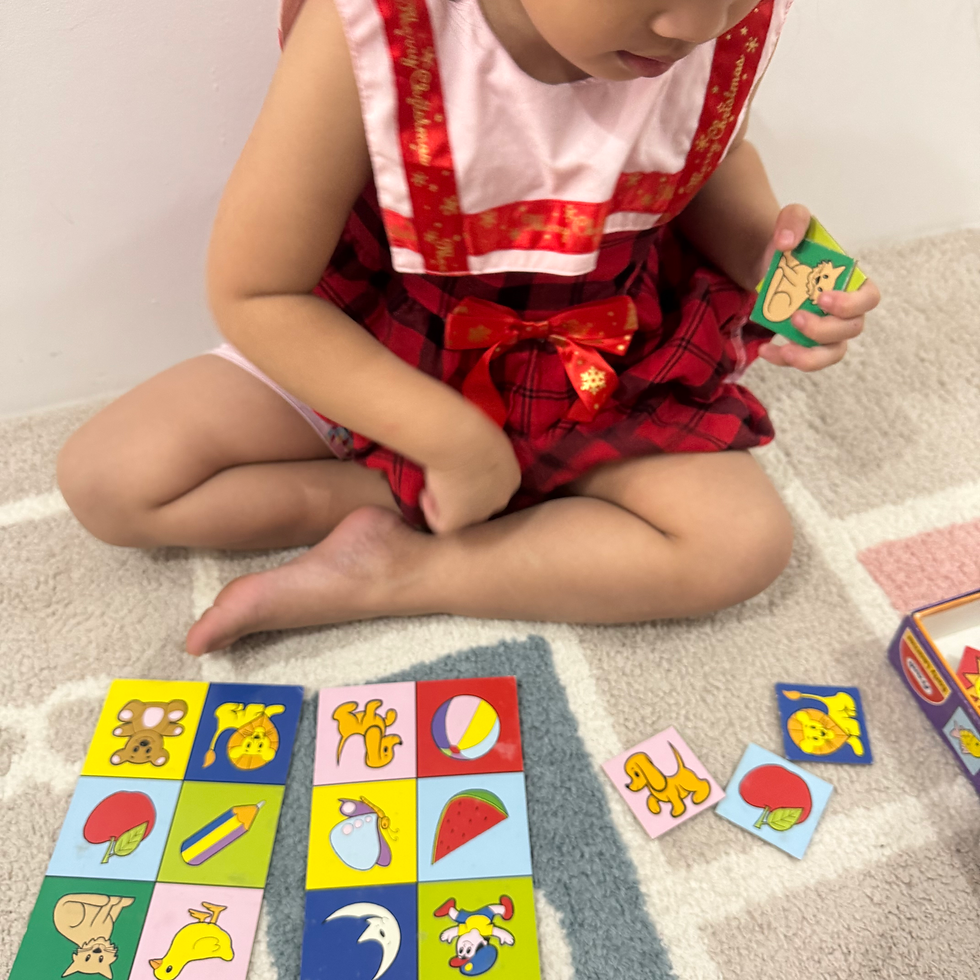
The Overlap: When It’s Both Speech and Language
While it’s helpful to separate them, many children experience a Communication Delay that involves both. For example, a child might have difficulty choosing the right words (Language) and struggle to coordinate the tongue and lips to say those words clearly (Speech).
When these areas overlap, a child can become deeply frustrated because they have so much to say, but the "system" isn't working. This is why we focus on the Whole Child—we don't just treat the sound; we treat the ability to connect.
Red Flags: When Should You Be Concerned?
Because every child develops at their own pace, it can be hard to know when to seek professional help. Developmental milestones are based on standardized averages provided by ASHA and the NIDCD.
Developmental Milestones for Speech (Articulation and Clarity)
By Age 2: People outside the family should understand about 50% of what your child says.
By Age 3: People should understand about 75% of what your child says.
Any Age: If your child seems to struggle or "block" while trying to get a word out (stuttering).
Developmental Milestones for Language (Vocabulary and Comprehension)
By 18 Months: The child should point to objects to show interest and follow simple commands.
By Age 2: They should have a vocabulary of at least 50 words and start combining two words (e.g., "Mama go," "More juice").
Socially: If the child consistently avoids eye contact or does not respond to their name.
What Can Parents Do Right Now?
If you are waiting for an appointment or just want to support your child today, try these two "at-home" techniques:
Modeling for Speech: Let Them See Your Mouth
Get down on their eye level. When you say a word, make sure they can see your lips. If you are saying "Ball," over-emphasize the "B" sound and let them watch how your lips pop.
Narrating for Language: Use "Self-Talk"
Instead of quizzing your child ("What's this? What color is that?"), simply narrate what you are doing. "I am pouring the juice. It is cold and orange. Now I am giving it to you." This builds their "software" library without the pressure of a test.
Conclusion: Connection is the Goal
At the end of the day, whether it is a speech issue or a language issue, the goal is the same: Connection. We want your child to be able to share their world with you.
In the Philippines, the practice of speech therapy is regulated by the Speech-Language Pathology Act (RA 11249). This ensures that when you see a Registered Speech-Language Pathologist (RSLP), you are working with a professional who is legally and clinically trained to untangle these challenges. You don't have to navigate the "hardware" and "software" errors alone.
📚 Sources & References
American Speech-Language-Hearing Association. What is Speech? What is Language? Published 2024. https://www.asha.org/public/speech/development/speech-and-language/
National Institute on Deafness and Other Communication Disorders. Speech and Language Developmental Milestones. Updated 2024. https://www.nidcd.nih.gov/health/speech-and-language
American Speech-Language-Hearing Association. How Does Your Child Hear and Talk? (Milestones). Published 2024. https://www.asha.org/public/speech/development/chart/
Republic Act No. 11249. Speech-Language Pathology Act of the Philippines. Enacted 2019. https://lawphil.net/statutes/repacts/ra2019/ra_11249_2019.html
Note: Some visual assets in this article were generated using advanced AI design tools to illustrate therapy concepts while maintaining family privacy.


Comments